
Hiatus Hernia
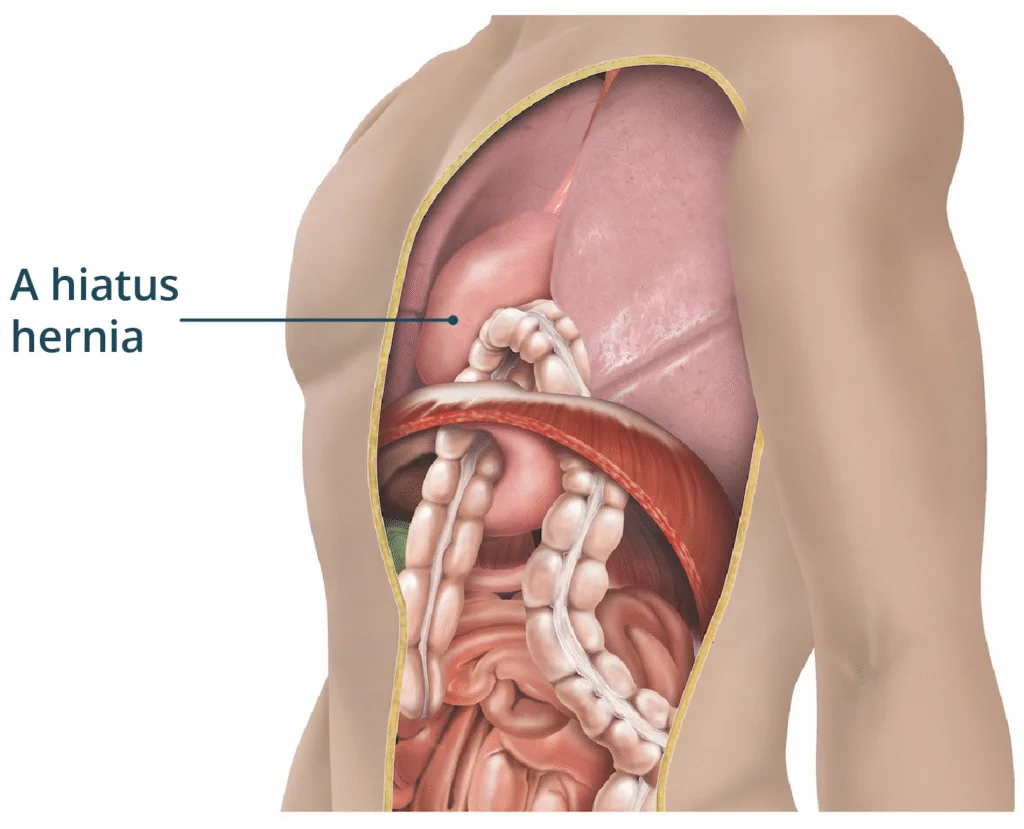
Hiatus Hernia: Causes, Symptoms & Treatment
A hiatus hernia occurs when part of the stomach pushes through the diaphragm into the chest. It is typically classified as either a sliding hernia (most common) or a paraesophageal hernia (less common but potentially more serious).
Common Symptoms:
- Heartburn or acid reflux
- Difficulty swallowing
- Chest discomfort after meals
- Regurgitation and bloating
Treatment Options:
Robotic Treatment for Hiatus Hernia
Robotic-assisted surgery for hiatus hernia is a minimally invasive technique that offers enhanced precision and control. Using advanced robotic technology, surgeons perform the repair through small incisions, improving visualization and accuracy. This approach typically results in less pain, reduced complications, minimal scarring, and faster recovery. Robotic surgery is especially beneficial for complex or recurrent hiatus hernias, ensuring safer outcomes and improved patient comfort.